A tap at a traffic light can feel minor—until your car starts pulling, rattling, or leaking a week later. At Auto Stars Collision & Mechanic in Richmond Hill, Ontario, we see how rear-end collision damage often hides beneath clean paint and straight bumpers. This guide explains the most common issues, what symptoms to watch for, and when a quick check can save you from bigger bills. You’ll also learn how shops diagnose rear-end collision damage with measurements and data—not guesswork—so you can make informed decisions about safety, cost, and timelines with zero drama.
1) Frame and Unibody Shift (The Invisible Backbone)
Even low-speed hits can tweak the unibody rails or rear body panel just a few millimetres. That small shift changes wheel alignment, panel gaps, and crash energy paths. Symptoms include crooked steering despite an alignment, uneven tire wear, or doors and trunk that don’t close cleanly. Precision is the fix: we map the vehicle on a computerized bench, compare to OEM specs, and correct with controlled pulls so the car tracks straight and crash geometry is restored.
2) Trunk Floor and Spare-Well Buckling — Rear-End Collision Damage
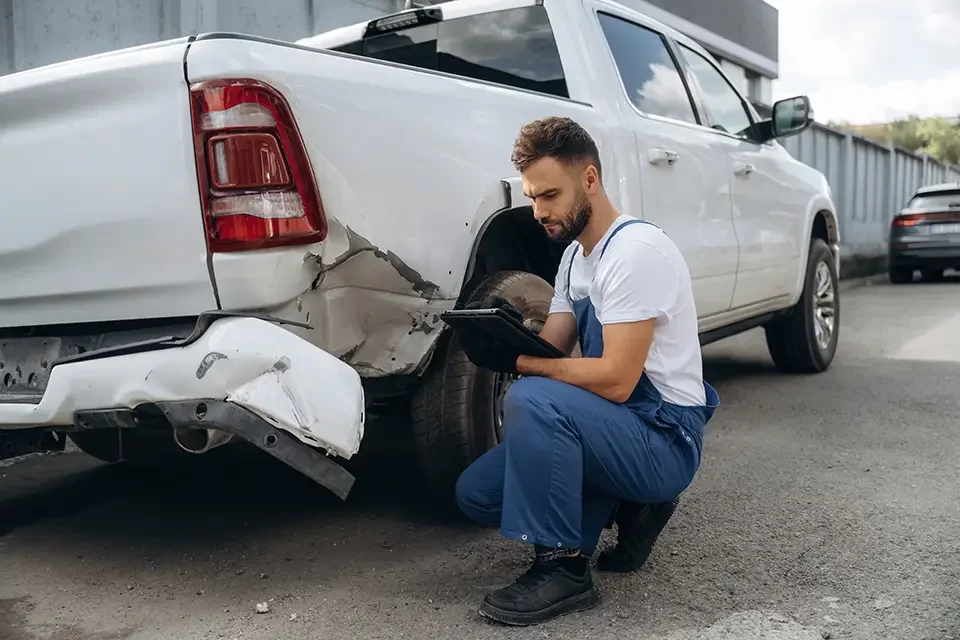
A common outcome of rear-end collision damage is a rippled trunk floor or lowered spare-tire well. Water may pool under the mat, your jack no longer sits flat, or the trunk carpet “waves.” Beyond annoyance, a distorted floor can compromise rear crash performance and mess with exhaust routing. We measure panel elevations, replace or straighten the panel, then reseal seams to keep the trunk dry and quiet.
3) Bumper Reinforcement and Energy Absorber Crush
Modern bumpers look fine after a hit because the cover is plastic. The real damage happens to the aluminum/steel reinforcement and foam/thermoplastic absorber behind it. Once these crush, they can’t protect you in a second impact. If parking sensors start glitching or the cover sags, it’s a flag. The cure is replacement with OEM-spec parts and recalibration of sensors so safety systems work like new.
4) Exhaust Misalignment and Hanger Tears — Rear-End Collision Damage
Rear-end collision damage often nudges tailpipes against the bumper cut-out or kinks the mid-pipe. Listen for new rattles at idle, a droning tone at highway speed, or a hot-plastic smell near the valance. We check hanger integrity, clearance, and backpressure; repairs range from rehanging and sealing joints to replacing crushed sections so the system flows, cools, and stays rattle-free.
5) Suspension and Alignment Drift
A gentle nudge can bend a rear control arm or toe link. You’ll feel a subtle “dog tracking,” steering wheel off-center, or ESC/traction warning lights during turns. We start with a four-wheel alignment and suspension inspection; if readings won’t hold, we replace the bent component and recheck. Proper alignment also protects tires—an easy way to avoid replacing rubber months early.
6) Trunk-Lid, Tailgate, and Latch Problems — Rear-End Collision Damage
When rear-end collision damage moves the latch striker even slightly, you’ll get intermittent “trunk open” warnings, wind noise, or water ingress. We re-center the latch, adjust hinges, and verify the weatherstrip seal with a light-and-water test. If the inner structure is distorted, we correct the mounting points before reassembling so the trunk closes with that satisfying single click.
7) Electrical Gremlins: Sensors, Cameras, and Lamps
A jolt can loosen connectors, crack PCB solder joints in lamp assemblies, or misalign radar and camera brackets. Watch for intermittent backup camera feed, parking sensors that falsely trigger, or a tail lamp that fogs and burns out bulbs quickly. Repairs may be as simple as reseating connectors—or as involved as lamp housing replacement and ADAS recalibration. The goal: restore function and weather sealing so issues don’t cascade.
8) Fuel Filler and EV Charge-Port Issues — Rear-End Collision Damage
Rear-end collision damage can distort the filler neck angle or misalign the EV charge-port door. Gas-cap warnings, slow pump shutoffs, or a port door that won’t latch cleanly are typical signs. We inspect for kinks, replace damaged gaskets, and verify EV charge-port alignment to keep moisture out and refuelling/charging effortless.
9) Interior Comfort: Rear Seatbacks, Anchors, and Noise
Impacts can tweak seatback latches or ISOFIX/LATCH points. If the rear seat won’t lock solidly or rattles appear after the accident, we check the anchors and latch engagement depth. We also hunt down new noises—loose trim clips, popped insulation, or a buzzing deck panel—and restore the quiet cabin you had before the hit.
10) Paint, Clearcoat, and Corrosion Pathways — Rear-End Collision Damage
Hairline cracks in paint around the trunk edge or bumper corners invite moisture and salt. Months later, flakes or rust appear. We sand to clean the substrate, refinish to OEM spec, and reapply seam sealer where needed. Proper refinishing after rear-end collision damage isn’t cosmetic—it’s corrosion prevention that protects resale value.
How We Diagnose Rear-End Collision Damage (No Guesswork)
A thorough inspection saves money by fixing causes, not symptoms. Our process:
- Test Drive & Symptom Log: Note pulls, noises, vibrations, and warning lights.
- Lift & Underbody Check: Look for ripples, leaks, exhaust contact, and torn bushings.
- Measurement & Alignment: Bench or laser systems compare structure to factory specs; four-wheel alignment verifies geometry.
- Electronics Scan & ADAS Check: We scan modules, test cameras/sensors, and recalibrate when needed.
- Water & Trunk Tests: Light-and-hose checks ensure latches and seals keep the cabin dry.
This sequence turns “it feels off” into a clear, prioritized repair plan.
Costs, Parts, and Timelines (They Vary by Factors)
Every repair depends on impact speed, vehicle design, part availability, and insurance scope—but these ballparks help planning:
- Bumper cover + absorber + sensors: Often $800–$2,000 parts/labour, depending on sensors and paint complexity.
- Reinforcement bar & brackets: $500–$1,200, higher on luxury/EV platforms.
- Exhaust rehanging/section replacement: $200–$900 based on parts and corrosion.
- Suspension arm/link + alignment: $350–$900 per corner.
- Trunk floor straightening or panel replacement: $700–$2,500, depending on extent and refinish.
- ADAS recalibration (camera/radar/park sensors): $150–$600 per system.
Timelines range from 1–3 days for light cosmetic/mechanical work to 1–2 weeks for structural, paint, or calibration-intensive jobs. We provide written estimates, photos, and a step-by-step schedule so you know what’s happening and why.
Insurance, Choice of Shop, and Quality Controls — Rear-End Collision Damage
For rear-end collision damage, you have the right to choose your repair shop. We coordinate with insurers, document findings with photos and measurements, and advocate for OEM-spec parts where safety systems are involved. Before delivery, we run a quality checklist: panel gaps, seal tests, alignment printout, scan report, road test, and a walk-through with you. If it’s not right, it doesn’t leave.
Local, Practical Help in Richmond Hill
Auto Stars Collision & Mechanic is set up for real life: quick assessments, clear estimates, and repair plans that prioritize safety-critical items first. We’re local to Richmond Hill, which means faster part sourcing from nearby distributors and same-day rechecks if something needs a small tweak. Your car should feel like itself again—quiet, straight, and confidence-inspiring.
Conclusion
A bumper that looks fine can still hide problems that shorten tire life, confuse sensors, or weaken crash protection. Knowing the common patterns of rear-end collision damage helps you spot issues early and insist on the right tests. If you’ve noticed new noises, warning lights, water in the trunk, or a steering wheel that sits off-center after rear-end collision damage, drop by Auto Stars Collision & Mechanic in Richmond Hill. We’ll measure, diagnose, and fix what matters—so your car drives straight, stays quiet, and protects you the way it should.
FAQs — Rear-End Collision Damage
My bumper looks okay. Do I still need an inspection?
Yes. The plastic cover can hide crushed absorbers or a bent reinforcement. A short inspection can confirm what’s good and catch what isn’t, before a second impact or a winter of salt makes it worse.
Why does the car pull after a small hit?
Even light impacts can nudge suspension links or shift the rear subframe. Alignment can mask the symptom temporarily; if readings won’t hold, a bent part needs replacement.
Do sensors and cameras always need recalibration?
Not always, but any bracket movement or bumper replacement can change aim. We scan modules and follow OEM procedures to recalibrate when measurements call for it.
Water showed up in my trunk a week later—related?
Likely. Latch misalignment or seam cracks can appear after a hit. We adjust the latch, reseal seams, and test with light and water to keep the trunk dry.